What to Do After You Get Your Child’s NWEA Map Test Scores Report (Understand and Improve)
What to Do After You Get Your Child’s NWEA MAP Scores
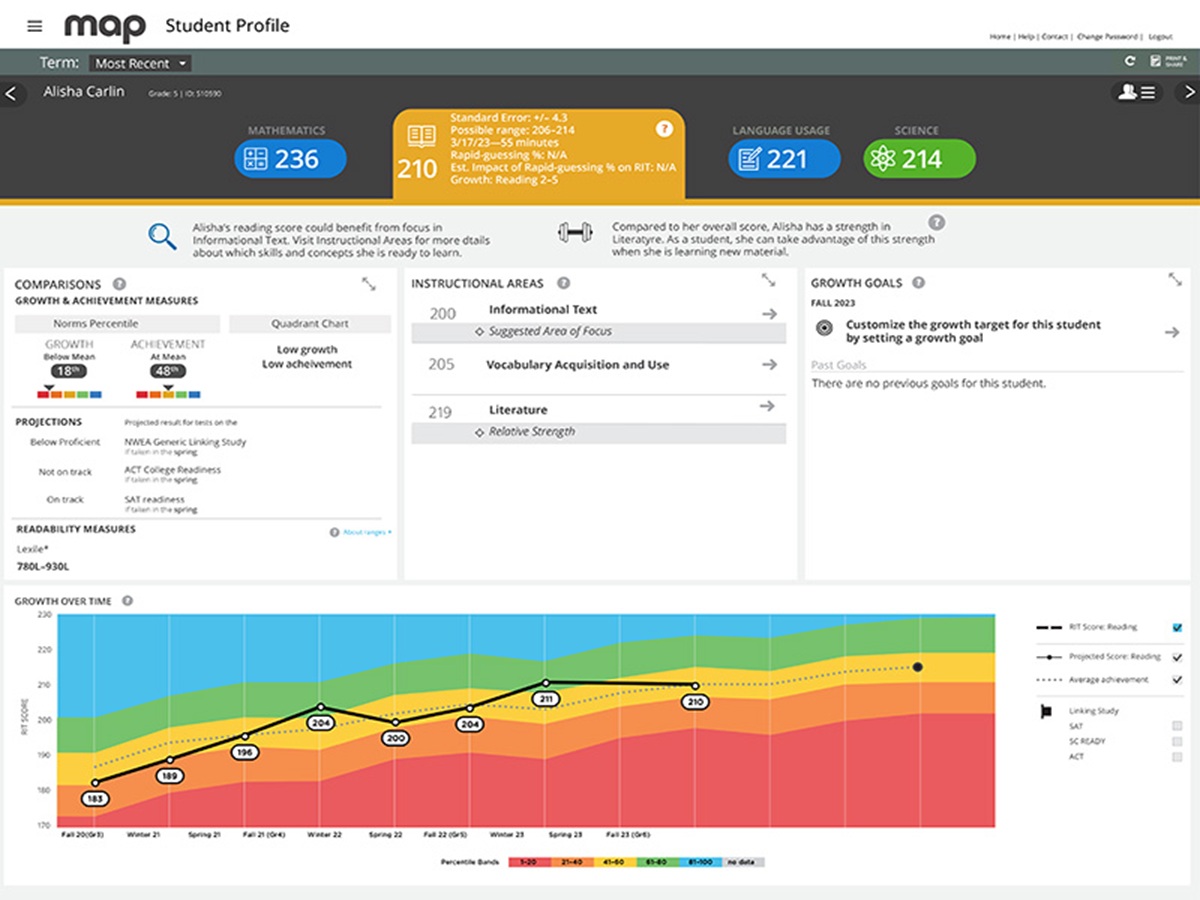
You have the MAP report open, and it is probably not as clear as it should be. There is a number in the middle of the page. Maybe a percentile. Maybe a little graph with a dot that looks important. Maybe several labels that make sense to assessment people and almost nobody else.
Parents usually want a simpler answer: Is this good? Is this bad? Should I be doing something? The honest answer is: maybe. That is why the report needs context. I have seen MAP testing from the classroom side, the principal’s office, and the district data meeting side. In classrooms, I saw kids take the test while laptops froze, headphones failed, and one student somehow finished before I had finished taking attendance. In administrator meetings, I saw the opposite problem: adults treating one score as if it explained a child completely.
Neither version is right. The score matters. It just needs to be read like a clue, not a verdict. A MAP score can tell you something useful about your child’s current academic level, but it cannot tell you who your child is. It cannot tell you how hard they tried that morning, whether they understood the directions, whether they were nervous, or whether the test happened to hit a weak spot before anyone had taught it well. So yes, read the score. Take it seriously. Just do not hand it more power than it deserves.
Why MAP Growth Is Not Like a Regular Classroom Test
MAP stands for Measures of Academic Progress. The test is usually called MAP Growth, and that second word is the part schools sometimes forget to explain to families. This is not a spelling quiz. It is not a chapter test where your child either studied the right material or did not. MAP is trying to estimate a student’s instructional level and then show whether that level changes over time.
That is why one testing season does not tell the whole story. Fall gives you a starting point. Winter may show whether instruction is taking hold. Spring gives you a better sense of the year’s growth. The pattern matters more than the single dot on the graph.
MAP is also adaptive, which means the questions adjust while the child is working. When a student answers correctly, the test often gets harder. When a student misses questions, it backs down. The goal is not for your child to get everything right. In fact, many students leave feeling as if the test kept giving them things they had never seen before. That feeling is not automatically bad. It often means the test found the edge of what they can do.
I wish schools explained that better before testing day. When no one explains adaptive testing, a child can walk out thinking, “I failed.” Meanwhile, the test may have done exactly what it was supposed to do: find the point where the work became difficult.
The RIT Score: Useful, But Easy to Misread
The main number on the report is the RIT score. RIT stands for Rasch Unit. You do not need to understand the statistics behind it to use the report well. The plain version is this: a RIT score is a scale score. It gives the school a way to track academic level across grade levels and across testing seasons.
That is why a score from 4th grade can still be compared with a later score in 5th or 6th grade. It is built for tracking movement. The problem is that parents often try to read it like a percentage. It is not a percentage. A RIT score of 215 does not mean 215 questions correct. It does not mean 21.5 percent. It does not translate neatly into a letter grade. It is simply a point on a learning scale.
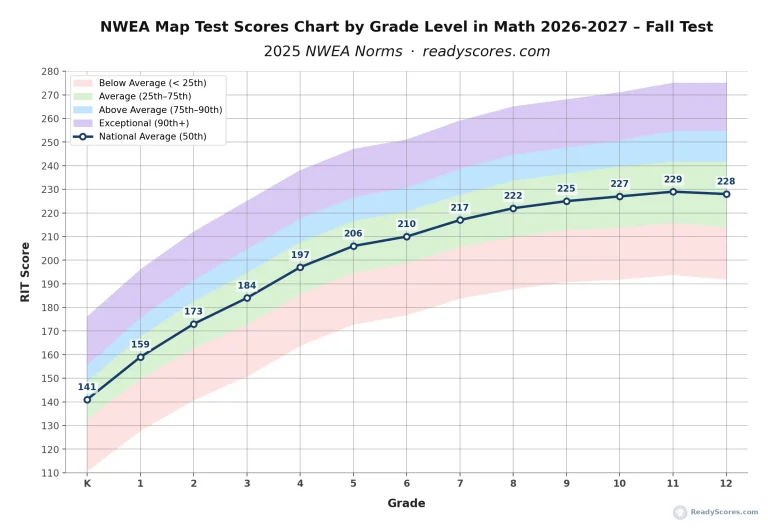
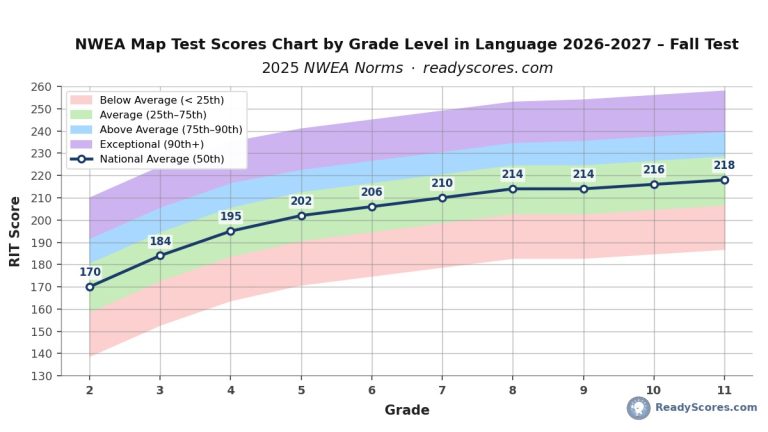
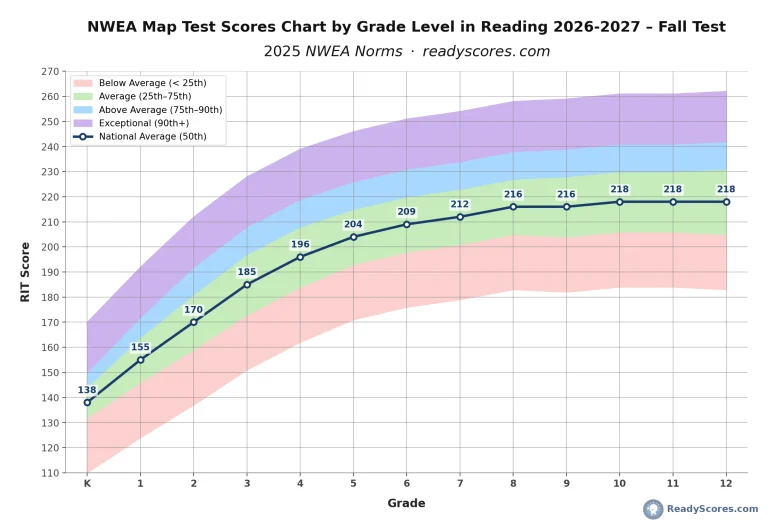
That sounds less satisfying than “your child got a B,” I know. But it is more useful when you understand what to look for. For example, many 3rd grade reading scores may fall somewhere in the low 200s, and middle school reading scores often move higher. But I would be careful about clinging too tightly to average ranges. Averages can help you orient yourself. They should not become the whole conversation.
I have seen students who were below average make strong, steady progress because their teachers knew exactly where to focus. I have also seen students who looked fine on paper but barely moved for two years. The first child needed encouragement and continued support. The second child needed attention too, even though the percentile looked comfortable. So yes, the RIT score matters, but the direction of the score matters more.
Do Not Start With the Percentile
Most parents start with the percentile. That is understandable. It feels familiar. A percentile gives you a quick comparison against other students. If your child is in the 72nd percentile, you probably breathe a little easier. If the report says 28th percentile, your stomach may drop.
But the percentile is not the best place to begin. A percentile tells you where your child compares with a national sample. That is useful context, but it does not tell you what to do next. It does not tell you which skill is weak. It does not tell you whether the teacher is seeing the same thing in class. It does not tell you whether your child is growing at a healthy pace.
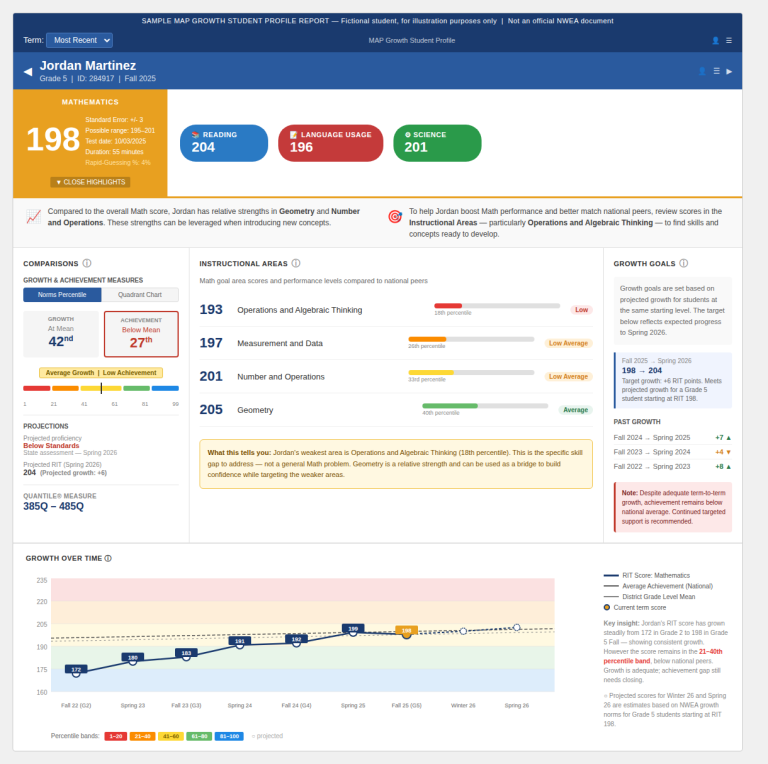
That is why I usually read a MAP report in a different order. First, look at growth. If your child has taken MAP before, check how the score changed. Did it go up? By how much? Did your child meet the projected growth target? Did the score flatten out? Did it drop? Growth tells you whether something is moving. Sometimes that is the part that matters most.
A student can be below grade level and still be making the kind of growth you want to see. Another student can be above grade level and still be coasting. The report may not scream that at you. You have to look for it.
Second, look at the instructional areas. This is where the report starts to become practical. Reading may be broken into areas like literary text, informational text, vocabulary, and comprehension. Math may show categories such as operations, algebraic thinking, number and operations, measurement, data, or geometry. These smaller categories can show you what the big score hides.
I once worked with a 6th grade student whose overall math score looked acceptable. Not great. Not alarming. Just acceptable. But the domain score for Measurement and Data was much lower than everything else. That mattered more than the overall score.
A few months later, the student started struggling in science. At first, people thought it was a reading problem because the student had trouble with lab questions and written explanations. But when we looked closer, the issue was not really reading. It was data interpretation. Graphs. Tables. Units. Comparing values. The MAP report had already given us the clue. We just had not paid enough attention to the smaller print.
Third, look at the percentile. The percentile is not useless. I would never tell a parent to ignore it. But I would treat it as background information, not the main event. It tells you comparison. Growth and domain scores tell you where to act.
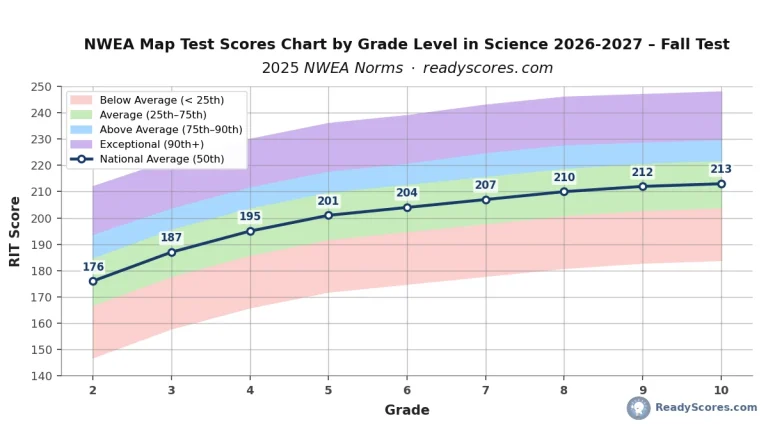
To compare your child’s scores with the NWEA national averages and norms, please visit:
NWEA Map Score Charts for Math and Reading
NWEA FAQ and Definitions
What is a Good NWEA Map Score by Grade
What You Should Do This Week
Do not panic. Also, do not toss the report in a drawer and hope the school has it handled. The best first step is boring but effective: email the teacher. Not a dramatic email. Not a worried essay. Just a calm, specific request.
You could write: We received the MAP Growth report and I would like to understand what the results mean. Could we schedule 10 or 15 minutes to talk about the main strengths, the areas that need support, and what we can do at home?
That is enough. Teachers tend to respond well to a question like that because it is focused. You are not demanding a full academic investigation. You are not accusing anyone of missing something. You are asking how to turn the report into a plan.
When you talk with the teacher, ask direct questions. Which area needs the most work right now? Does this score match what you see in class? Is my child on track with expected growth? Was anything about the result surprising? What is one specific thing we can practice at home?
That last question is important. “Read more” is not specific enough. “Have your child read nonfiction twice a week and explain the main idea in their own words” is much better. “Practice math” is too broad. “Work on multiplication fluency because it is slowing down multi-step problem solving” gives you something to actually do.
Sometimes teachers start with broad advice because they are used to explaining data quickly. Push gently for the specific version. Not aggressively. Just enough to get an answer that helps your child.
Ask How the School Uses MAP Scores
This is one of the most useful questions parents forget to ask. Schools do not all use MAP data the same way. Some use it for reading groups. Some use it for math intervention. Some use it for enrichment. Some use it in data meetings every few weeks. Some use it heavily in the fall and then barely look at it again until spring.
Ask. Is my child being placed in any support group because of this score? Will the score affect reading or math instruction? Are teachers using the domain scores, or mostly the overall RIT score? Will my child be tested again later this year? What would you hope to see by the next testing window?
You are not being difficult by asking these questions. If a test is important enough for your child to take, it is important enough for the school to explain.
When a Low Score Should Concern You
A very low score deserves attention. Not panic. Attention. The first question is not “What percentile is this?” It is “Does this sound like my child?” Ask the teacher that directly.
If the teacher says, “No, this surprised me,” then you look at testing conditions. Was your child tired? Did they rush? Were they sick? Did they take the test right after something stressful? Kids are not machines, and MAP is not immune to a bad Tuesday.
But if the teacher says, “Yes, this lines up with what I’m seeing,” then the score is probably pointing to a real gap. That is when you ask what support is already happening, what skill is weakest, and how progress will be checked before the next testing window.
One low score is information. The same low area across fall, winter, and spring is a pattern. Patterns deserve action. If your child keeps scoring low in reading comprehension, do not wait a full year and hope maturity fixes it. Ask what intervention is being used. Ask whether progress is being monitored. Ask what you should see at home if the support is working.
For math, repeated weakness in number sense, fractions, or problem solving can grow into a bigger issue later. Math stacks. A small gap in 4th grade can become a much louder problem in 6th grade if no one addresses it. That does not mean you should panic. It means you should not sleepwalk past the warning sign.
When a High Score Still Needs Attention
High scores can create their own problem. Everyone relaxes. Sometimes that is fine. A child is doing well, growing well, and the classroom work is appropriately challenging. Good. Celebrate that. But sometimes a high score hides a lack of growth.
A child may still be above average, but the score has barely moved. Or the overall percentile may look strong while one domain is much weaker than the rest. Or the child may be finishing grade-level work easily but not being stretched. If your child scores high, ask about growth anyway.
Did they meet the growth target? Are they being challenged? Are there any uneven domain scores? Is there enrichment, or are they just getting more of the same work? Advanced students still need instruction. They still need feedback. They still need to learn how to work through difficult material.
A good score should not end the conversation. It should make the conversation more precise.
What Actually Helps Improve MAP Scores
Here is the part that may save you time and money. Endless MAP practice questions are usually not the answer. I understand why parents look for them. A score comes home, and the first instinct is to search for practice tests. It feels productive. It feels like doing something.
But MAP is adaptive. It is not a weekly spelling test where memorizing the list gets you across the finish line. The test is trying to measure underlying skill. So the best way to improve the score is to improve the actual reading or math underneath it.
For reading, I would start with two things: frequency and conversation. Children need to read often. Not only when there is a book report. Not only during school. Often enough that reading becomes normal rather than special. The type of reading can vary more than people think. Novels, graphic novels, sports articles, science books, biographies, magazines, instructions for a game, history pages, whatever the child will genuinely read. Consistent reading builds vocabulary, stamina, background knowledge, and comprehension over time.
But do not stop at silent reading. Talk about it. Not like a quiz. Not “What was the main idea?” every three minutes. A real conversation. Why do you think that character did that? Did the ending make sense? What does that word mean here? Do you agree with the author? What was confusing? Those small conversations do more than people realize. They teach children to explain their thinking, notice details, and connect ideas.
For math, make it show up in normal life. I know that sounds like something from a school newsletter, but I mean it literally. Unit prices at the grocery store. Fractions in cooking. Estimating how long a drive will take. Comparing discounts. Measuring a wall. Doubling a recipe. Looking at a sports statistic. Figuring out whether the larger box is actually a better deal.
That is math. Not a worksheet. Not a lecture. Just the daily habit of noticing numbers and relationships.
If you use online practice, make it targeted. Khan Academy can be excellent. So can other tools. But do not just assign random review for an hour. Look at the MAP domain score. Pick the weak area. Work on that. Fifteen focused minutes will usually beat a long, unfocused session.
What to Say to Your Child About the Score
Please talk to your child about the report. Do not whisper about it in another room while your child senses something is wrong. Kids notice. If adults do not explain the score, children often invent their own explanation, and it is usually harsher than the truth.
For a younger child, keep it simple: This test helps us see what you already know and what we are going to keep practicing.
For an older child, you can be more direct: Your overall reading score grew, but vocabulary is still an area to strengthen. That gives us something specific to work on.
The wording matters. Not “you are bad at vocabulary.” Not “you have always struggled with math.” Not “reading just is not your thing.” Those sentences land harder than adults think.
Try this instead: This is the skill we are working on next. That is a plan, not a label.
I have heard caring parents accidentally turn a temporary gap into a permanent identity. “She is not a math kid.” “He is behind.” “She has always been low in reading.” Children may not argue. They may not even react. But they hear it.
A better message is simple: skills grow, scores can change, and now we know the next thing to practice. That is not fake cheerleading. That is learning.
What Not to Do With MAP Scores
Do not compare siblings. I know it is tempting, especially when the numbers are sitting right there. But one child’s score and another child’s score may not mean what you think they mean. Different grades, different seasons, different growth patterns, different starting points. Comparison rarely helps. It usually creates resentment.
Do not punish the score. If your child rushed through the test or did not try, that is a behavior conversation. But punishing a low number teaches the wrong lesson. It makes testing feel dangerous. It also makes children less honest about what they do not understand.
Do not buy every workbook you find online. Start with the actual report. Talk to the teacher. Identify the skill gap. Then choose support.
Do not treat the percentile like a personality trait. A percentile is a comparison from one testing moment. It is not destiny.
A Simple Plan for the Next 30 Days
If you want a practical plan, keep it small. First, read the report once without reacting out loud. Second, email the teacher and ask for a short conversation. Third, choose one academic focus. One. Not six. Maybe vocabulary. Maybe fractions. Maybe informational text. Maybe measurement and data.
Fourth, build a small routine around that skill. For reading, that might mean 20 minutes of reading four nights a week and two short conversations about the text. For math, it might mean 15 minutes of targeted practice four times a week, plus normal-life math when it naturally appears.
Fifth, check back with the teacher after a few weeks. Not every day. Not obsessively. Just enough to know whether the support is helping. Small, steady action beats a burst of panic almost every time.
The Part Parents Usually Need to Hear
Your child is not a score. You know that. Of course you know that. But reports have a way of making adults forget.
A MAP score can show growth. It can reveal gaps. It can help teachers target instruction. Used well, it is a useful tool. But it is still a tool. It does not measure curiosity. It does not measure kindness. It does not measure whether your child had a rough morning, felt anxious, guessed too quickly, or quietly knows more than the report managed to capture.
So use the score. Just do not let it become the whole story. The best response is not panic, and it is not indifference. It is curiosity. What does this tell us? What does it not tell us? What is the next right step?
That is how you turn a MAP report from a confusing page of numbers into something useful. And if you are still unsure, ask the teacher to walk through it with you. Not because you failed to understand it. Because these reports are not always written for normal human beings. They should be. But until they are, ask questions.
Your child does not need you to become a testing expert overnight. They need you to stay calm, stay interested, and help the adults around them turn the data into support. That is the work. And it is work worth doing.
To compare your child’s scores with the NWEA national averages and norms, please visit:
NWEA Map Score Charts for Math and Reading
NWEA FAQ and Definitions
What is a Good NWEA Map Score by Grade
Sources:
Official NWEA Website
NWEA on Wikipedia
NWEA MAP Test Login
Other NWEA MAP Resources
NWEA MAP Test Scores by Grade Level
NWEA MAP Math Scores by Grade
NWEA MAP Reading Scores by Grade
NWEA MAP Language Scores by Grade
NWEA MAP Science Scores by Grade
Free NWEA MAP Score Calculator
Free NWEA MAP Growth Tracker
What Is a Good NWEA MAP Score?
NWEA MAP Test Frequently Asked Questions
How to Understand and Improve NWEA MAP Scores
What to Do When an NWEA MAP Score Is Below Grade Level