What to Do After You Get Your Child’s i-Ready Diagnostic Score Report (Understand and Improve)
What to Do After You Get Your Child’s i-Ready Diagnostic Scores
Welcome.
Pull up a chair. I mean that literally. Get comfortable, because I want to actually talk to you about this, not just hand you a list of bullet points and send you on your way.
I’ve been in education for going on 19 years. I started as a 4th grade teacher in a Title I school where I gave i-Ready on laptops that froze every ten minutes and called it a diagnostic. I became an assistant principal, then a principal, then spent several years at the state level working with school districts on assessment implementation. Which is a fancy way of saying I spent a lot of time in conference rooms explaining test data to people who had every right to be confused by it.
So when I say I’ve seen this score report from every possible angle, I mean it.
Here’s the honest truth about most parents who get this report: they either panic or they file it. Both are understandable. Neither is useful. What I want to do here is give you a third option. Actually understanding what you’re looking at and doing something smart with it.
What This Test Is and Is Not
i-Ready is adaptive. Every question your child answers changes the next question. Get one right, the difficulty goes up. Miss one, it finds a slightly easier path. The test is actively hunting for the edge of your child’s knowledge. The spot where they know things solidly and the spot where things start to get shaky.
That means your child was never going to ace this test. It’s not built to be aced. It’s built to map a precise location on a learning continuum. Once I explained this to a dad at a conference who’d been furious that his son “failed half the questions,” his whole body language changed. He said, why didn’t anyone tell us that? Honestly, I don’t know. But I’m telling you now.
The test covers Reading and Mathematics. Each one produces a scale score and a placement level. The placement levels are Early On Grade Level, Mid or Late On Grade Level, One Level Below, and Two or More Levels Below.
What I want you to understand first is that the placement level is not the most important thing on that report. I know it looks like it is. It’s not.
The Part Most Parents Miss
Look past the placement level and find the domain scores.
In reading, i-Ready breaks things down into specific skill areas: Phonological Awareness, Phonics, High-Frequency Words, Vocabulary, and Comprehension of Literary and Informational Texts. In math, you’re looking at Number and Operations, Algebra and Algebraic Thinking, Measurement and Data, and Geometry.
I cannot tell you how many times I’ve sat with a parent and said: look here, not here. A student can be On Grade Level overall while quietly struggling in vocabulary. A student can be One Level Below overall while being genuinely strong in phonics, with just one domain dragging everything down. The domain breakdown tells you what’s actually going on. The headline score tells you roughly where to look.
Look at the domains. Every time.
Growth Is the Number That Matters Most
If your child has taken i-Ready before, there should be a growth score on that report. It shows how many scale score points your child gained since the last diagnostic.
This is the number I care about most. More than the placement level. More than the percentile. More than the grade-level comparison.
A child who is One Level Below grade level but growing steadily is on a trajectory that will close that gap. A child who is On Grade Level but not growing is a child whose gap is quietly opening up relative to where they need to be. I’ve watched both play out over and over. Growth is the signal that tells you whether the current situation is moving in the right direction.
When you meet with the teacher, and you should meet soon, lead with that question. Is my child growing? By how much? Is that growth rate enough?
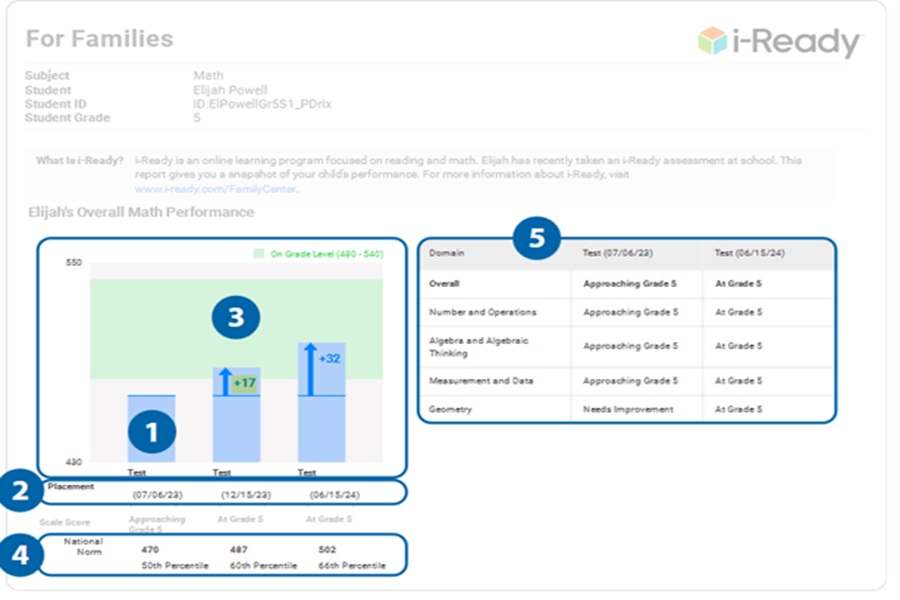
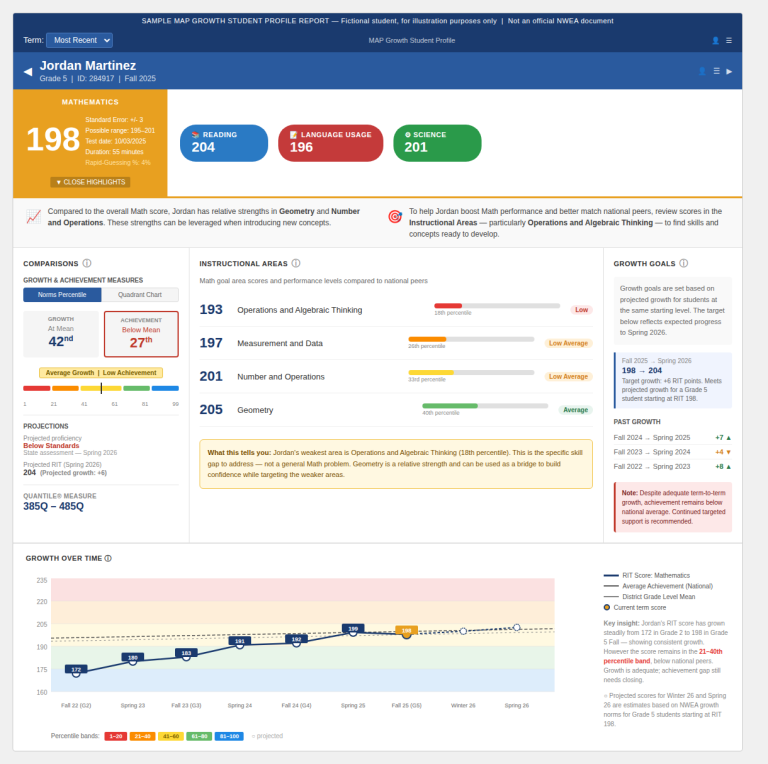
An Example of the i-Ready Diagnostic Scores report. Pay special attention to the Percentiles, and the Placement score trajectory vs the On Grade Level (Blue).
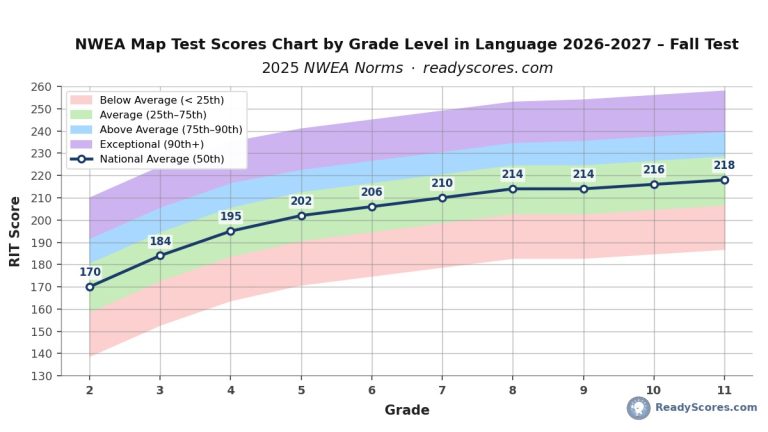
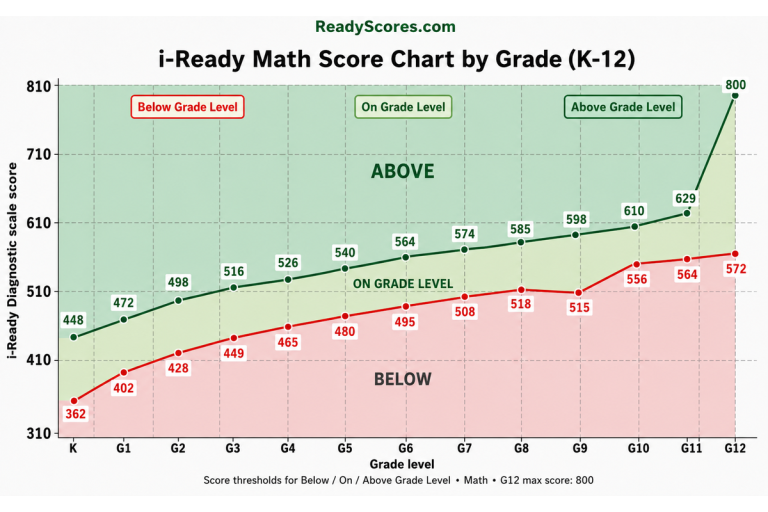
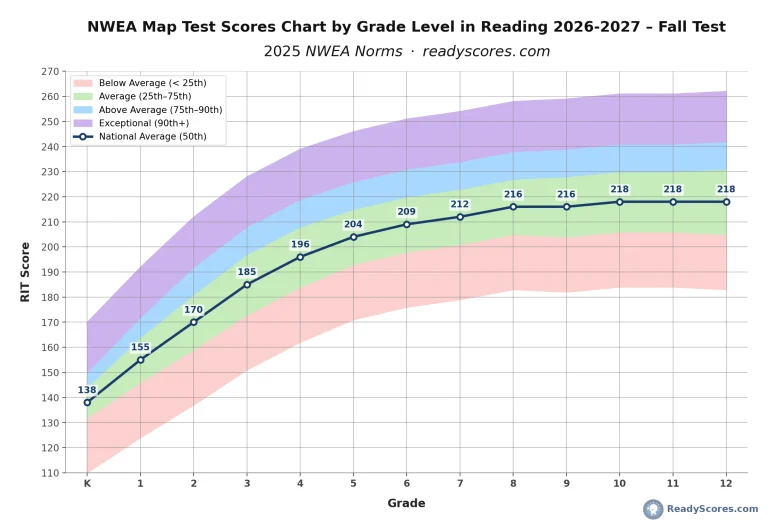
To compare your child’s scores with the national averages and norms, please visit:
i-Ready Diagnostic Score Charts for Math,
i-Ready Diagnostic Score Charts for Reading
i-Ready FAQ and Definitions
Okay, Now What Do You Actually Do
Email the teacher this week. I know that sounds simple but a surprising number of parents don’t do it. A short note: I received the i-Ready scores and I’d love 15 minutes to talk through what they mean and how I can help at home. That’s it. Any teacher worth their salt will respond.
When you get that meeting, ask for specifics. Not “how’s my child doing” but specifics. Which domains are the priority right now? What’s the school doing to address them? What’s one or two things I can do at home that actually target my child’s specific gaps?
That last question is important because “read more” is not an answer. “Work on making inferences in nonfiction texts” is an answer. Push gently for the specific thing.
Also ask whether your child is using i-Ready lessons as part of classroom instruction. Most schools that assess with i-Ready also use the lesson platform. If your child is doing those lessons, you want to know how often and whether the skills being targeted match what the diagnostic showed.
One thing I’ll say plainly: don’t sign up for outside tutoring before you have this conversation. I know when scores come home there can be pressure. Sometimes from within yourself, sometimes from marketing that seems to show up suspiciously fast. Tutoring might be the right call. But the school has specific data, and that data should drive the decision. Spend the tutoring money after you know exactly what skills need targeting, not before.
What You Can Do at Home That Actually Works
You don’t need to become a curriculum specialist. You really don’t.
For reading: read together, and talk about what you’re reading. I used to read chapter books aloud to my kids way past the age most parents stop. My daughter was in 6th grade when we finished the last Harry Potter together. And the whole time we just talked. Not in a teacher way. More like, wait, why do you think she did that? Or, what do you think is about to happen here? Half the time my kids had better answers than I would have. That back and forth, totally unscripted, happening on a couch at 9pm, is where vocabulary and comprehension actually grow. Not in a workbook. In conversation.
For math: use real life whenever you can. I’m a broken record on this but I believe it. My husband does unit price comparisons at the grocery store with our kids and calls it math practice. Takes 90 extra seconds. Builds number sense in a way worksheets genuinely can’t. Fractions while cooking. Geometry while building things. Time and rate on road trips. None of this requires prep. Just noticing.
Short and often beats long and occasional. Twenty minutes every evening beats a two-hour weekend session every single time. The brain consolidates learning through repeated, low-pressure exposure. Don’t let perfect be the enemy of good here.
How to Talk to Your Child About the Scores
Please talk to your child about the scores.
I know that can feel tricky. You don’t want to worry them. You don’t want to add pressure on top of pressure. But kids who understand their own data do better with it than kids who sense adult anxiety around something nobody will explain to them.
Even young kids can handle the basics. Something like: the test showed us what you’re great at and what we want to work on more. That’s enough for a second grader. Older kids can handle specifics. Tell a 5th grader: vocabulary is where we’re going to put more energy this year, and here’s what that looks like. What I’d ask you to watch is your tone.
I’ve watched this happen more times than I’d like to admit. A parent sitting across from me after a conference, genuinely trying to help, telling their kid something like “you’ve always had trouble with math” , and meaning it as context, not criticism. The kid hears it differently. Nine years old and they’re already building a story about themselves. I had one mom cry in my office because she realized she’d been saying some version of that for three years. Her son had started refusing to even try on math assignments. He’d decided the outcome in advance.
Watch what you say around scores. That’s all I’m asking. Not a script. Just awareness.
Kids file those two statements in completely different places in their heads.
Your child is not their score. They have a skill profile that exists right now, at this age, in this school year. It will change. Your job, and the school’s job, is to make sure it changes in the right direction.
A Thing I Really Want You to Hear
The families I watched make real, lasting differences in their kids’ outcomes had one thing in common. They stayed in it. They kept asking questions at school. They kept books around the house. They talked about hard things as things to figure out, not proof of a limitation. None of that requires money or expertise. It just requires showing up, paying attention, and refusing to let a number on a page be the last word.
That’s available to everyone. It doesn’t cost anything.
You read this whole article. You’re already doing it right.
To compare your child’s scores with the national averages and norms, please visit:
i-Ready Diagnostic Score Charts for Math,
i-Ready Diagnostic Score Charts for Reading
i-Ready FAQ and Definitions
Sources:
Curriculum Associates
iReady Login
i-Ready on Wikipedia
Other i-Ready Resources
i-Ready Scores and Grade-Level Benchmarks
i-Ready Reading Score Chart
i-Ready Math Score Chart
Guide to i-Ready Diagnostic Results
Answers to Common i-Ready Questions
Calculate an i-Ready Score and Percentile
Track i-Ready Reading and Math Growth
i-Ready Instructional Levels by Grade
Understand i-Ready Grade Placement Levels
Good i-Ready Scores for Each Grade
Understanding Your Child’s i-Ready Diagnostic Report
Helping a Child Who Scored Below Grade Level